Point to something you want to try. You can show a grown-up how it works!
🔎 Kindness Detectives
10 minutes · Paper and crayons
- Show the group one kind action, like making room for someone to sit.
- Invite children to look around for other ways someone could help or include a classmate.
- Draw one idea. Let a partner guess what the picture shows.
Ask: “What could we do if someone wants to join our game?”
🌉 Build a Bridge Together
Play the picture-led bridge game
15 minutes · Paper, crayons, and blocks
- Draw a river on the paper and place it on the floor or table.
- In pairs, take turns adding one block to make a bridge across the river. Try moving a crayon across it.
- If the bridge falls, pick one thing to change and try again.
Ask: “Which idea from your partner helped the bridge work?”
👂 Listening Safari
5 minutes · No supplies
- Sit or stand together and listen quietly for 20 seconds.
- Take turns naming, pointing toward, or copying a sound you noticed.
- Listen once more and see if you notice one of the sounds a friend shared.
Ask: “What did your friend notice that you missed?”
Many Ways to Say Hello
10 minutes · Paper and crayons
- Start with two greetings children can try, like a wave and a spoken hello.
- Invite children who want to share a greeting they use at home. Practice it together if they’re comfortable.
- Make a welcome sign with words or pictures and hang it near the door.
Ask: “How would you greet someone on their first day?”
🧸 Puppet Problem Solvers
10 minutes · Two puppets, socks, or stuffed animals
- Act out two puppets reaching for the same toy.
- Pause and invite children to show how each puppet might feel.
- Try two endings, like taking turns or finding a way to play together.
Ask: “What could the puppets say to help?”
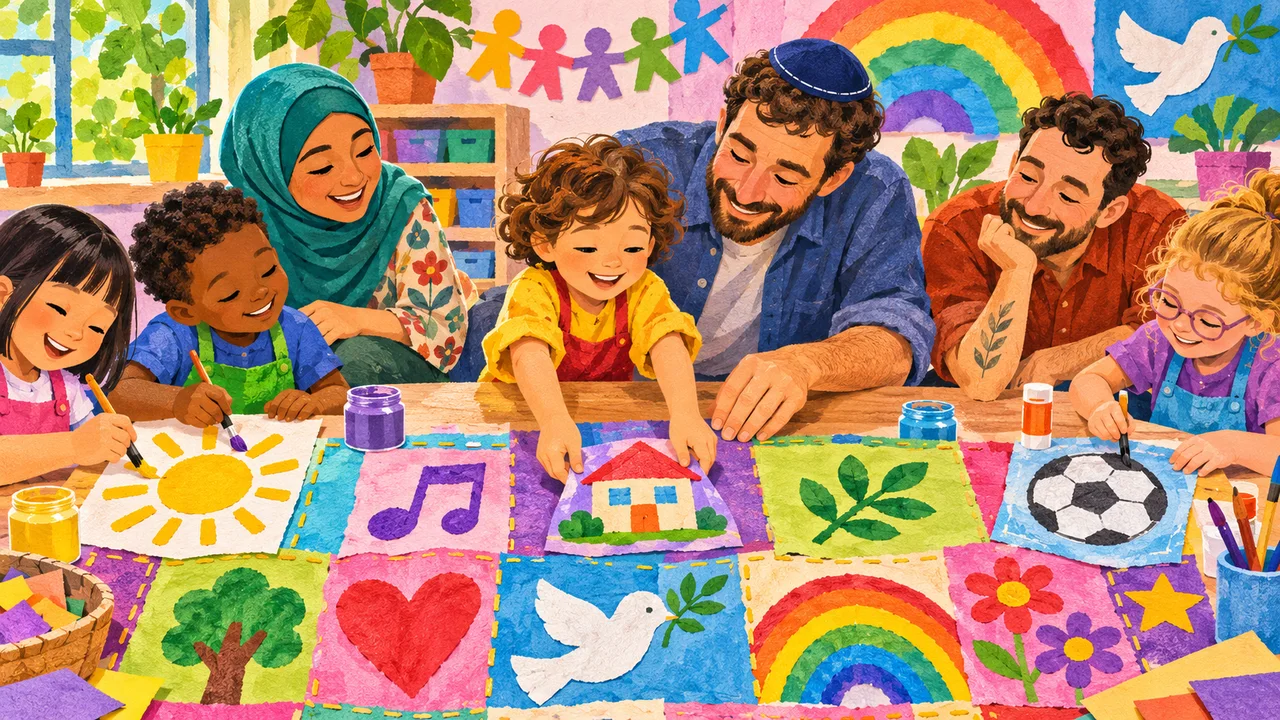
🎨 Our Welcome Quilt
Play on this screen
15 minutes · Squares of paper, crayons, and tape
- Give each child a square to draw a favorite song, food, game, or something that makes them feel welcome.
- Put the squares together on a wall or table like a quilt.
- Invite children to talk about their square or point to a detail they like in someone else’s drawing.
Ask: “What do we have in common? What new thing did you discover?”
 Cyrus Peace Foundation